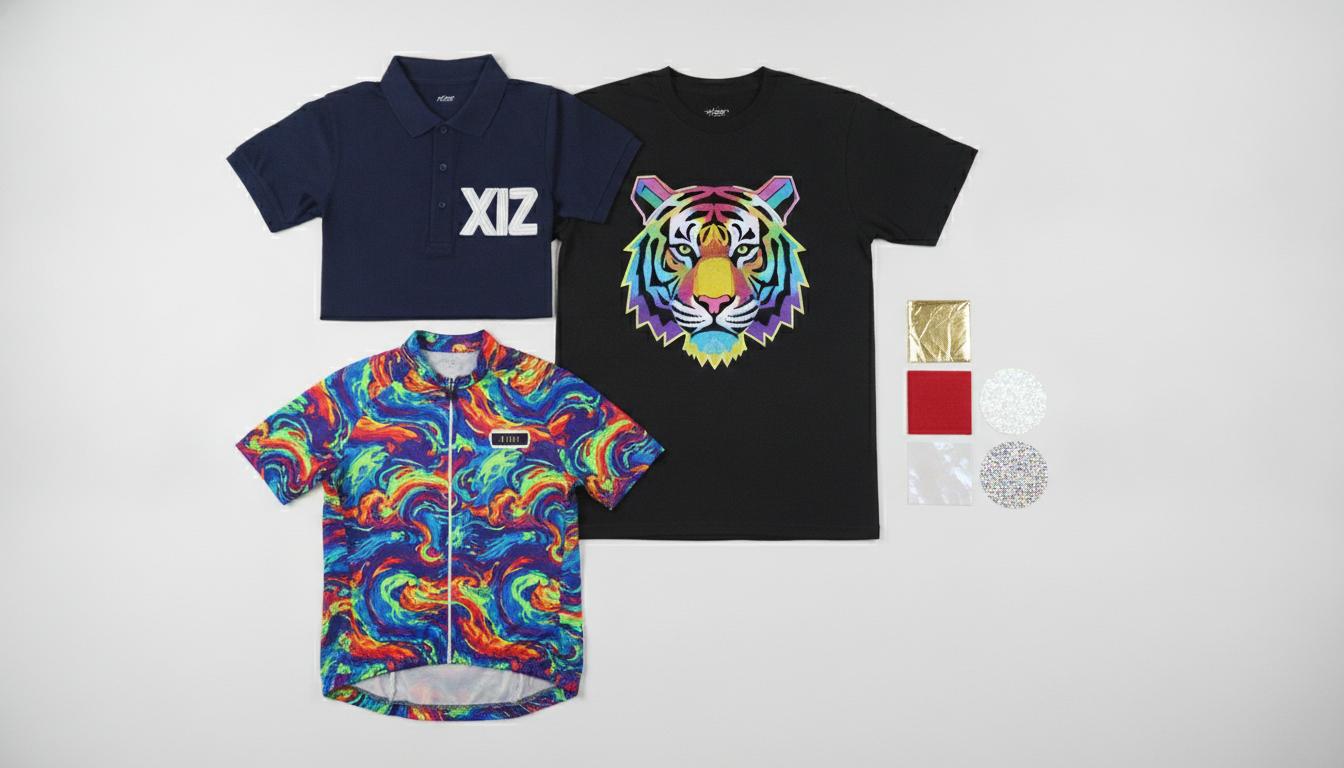
Choosing the right decoration method determines how your brand looks, feels, and lasts. Screen printing, embroidery, and sublimation each have distinct strengths — and weaknesses. At FABRIOZA, we offer all three (plus DTF and puff print), so we recommend the best option for your specific design rather than pushing whatever method we specialize in.
Screen Printing
Screen printing pushes ink through a mesh stencil onto fabric. It's the most common decoration method for apparel.
Best for: Bold, simple designs with 1-4 colors, high-volume orders, cotton and cotton-blend garments, streetwear brands, event tees, and promotional apparel.
Pros: Lowest cost per unit for bulk orders, vibrant opaque colors on dark garments, durable (thousands of washes), soft-hand water-based inks available.
Cons: Not economical for photos or gradients, setup costs make small orders expensive, each color requires a separate screen, can crack over many years.
Embroidery
Embroidery uses needle and thread to stitch designs directly into fabric. It's the premium choice for professional, long-lasting branding.
Best for: Logos on polos and corporate wear, premium hoodies and jackets, workwear and uniforms, 3D puff embroidery on streetwear.
Pros: Extremely durable (outlasts the garment), premium professional appearance, works on almost any fabric, 3D puff option for bold texture.
Cons: Higher cost per unit than printing, not suitable for detailed photos or gradients, can be uncomfortable on direct-skin areas, larger designs become expensive.
Sublimation Printing
Sublimation uses heat to transfer dye into polyester fibers, creating permanent, full-color designs that become part of the fabric.
Best for: All-over designs on polyester garments, team jerseys with complex graphics, cycling kits and sportswear, photographic prints, esports jerseys.
Pros: Unlimited colors and gradients, permanent (never cracks, peels, or fades), all-over coverage (seam to seam), no setup costs for design changes.
Cons: Only works on polyester or high-poly blends, cannot print white (white areas show base fabric), higher cost for small orders, not suitable for cotton garments.
DTF (Direct to Film) — The Fourth Option
DTF prints designs onto a special film, which is then heat-pressed onto fabric. It works on any fabric type and offers full-color detail without the minimums of screen printing.
Best for: Small runs with full-color detail, quick turnaround samples, cotton garments that need full-color prints.
Decision Framework: Which Should You Choose?
| Your Need | Best Method |
|---|---|
| Budget tees with simple logos | Screen print |
| Premium hoodies/jackets | Embroidery (or combination) |
| Team jerseys | Sublimation |
| All-over fashion prints | Sublimation |
| Corporate polos | Embroidery |
| Streetwear graphics | Screen print or DTF |
| Detailed small-run prints | DTF |
Cost Comparison
| Method | Cost at 100 pcs | Durability | Color Range |
|---|---|---|---|
| Screen Print | $2-4/unit | Good | 1-6 colors |
| Embroidery | $4-8/unit | Excellent | Thread-limited |
| Sublimation | $5-10/unit | Excellent | Unlimited |
| DTF | $3-6/unit | Good | Unlimited |
FABRIOZA's Capabilities
We offer all decoration methods under one roof: 8-color automatic screen printing, 12 multi-head embroidery machines (Tajima and Barudan), large-format sublimation printing, and DTF transfer systems. Our team recommends the best method for your specific design, budget, and product type.
FABRIOZA Offers All Decoration Methods
Tell us your product and we'll recommend the best technique. Free consultation. Quote in 24 hours.
Get Decoration Advice →Frequently Asked Questions
Which method is most durable?
Embroidery is the most durable — it typically outlasts the garment itself. Sublimation is also permanent. Screen print is durable but can crack after many years of heavy washing.
Can I combine methods on one garment?
Yes, many brands use embroidery for the chest logo and screen print for back graphics. We do combination decoration regularly.
Which is cheapest for small orders?
DTF for full-color small runs. Screen print for 1-2 color designs at 50+ pieces. Embroidery is consistently higher cost but offers premium positioning.
Can you match Pantone colors?
Yes, all methods support Pantone matching. Sublimation offers the most precise color reproduction.
Which method should I choose for my brand?
Send us your design and we'll recommend the best method for your product, budget, and brand positioning — free of charge.