
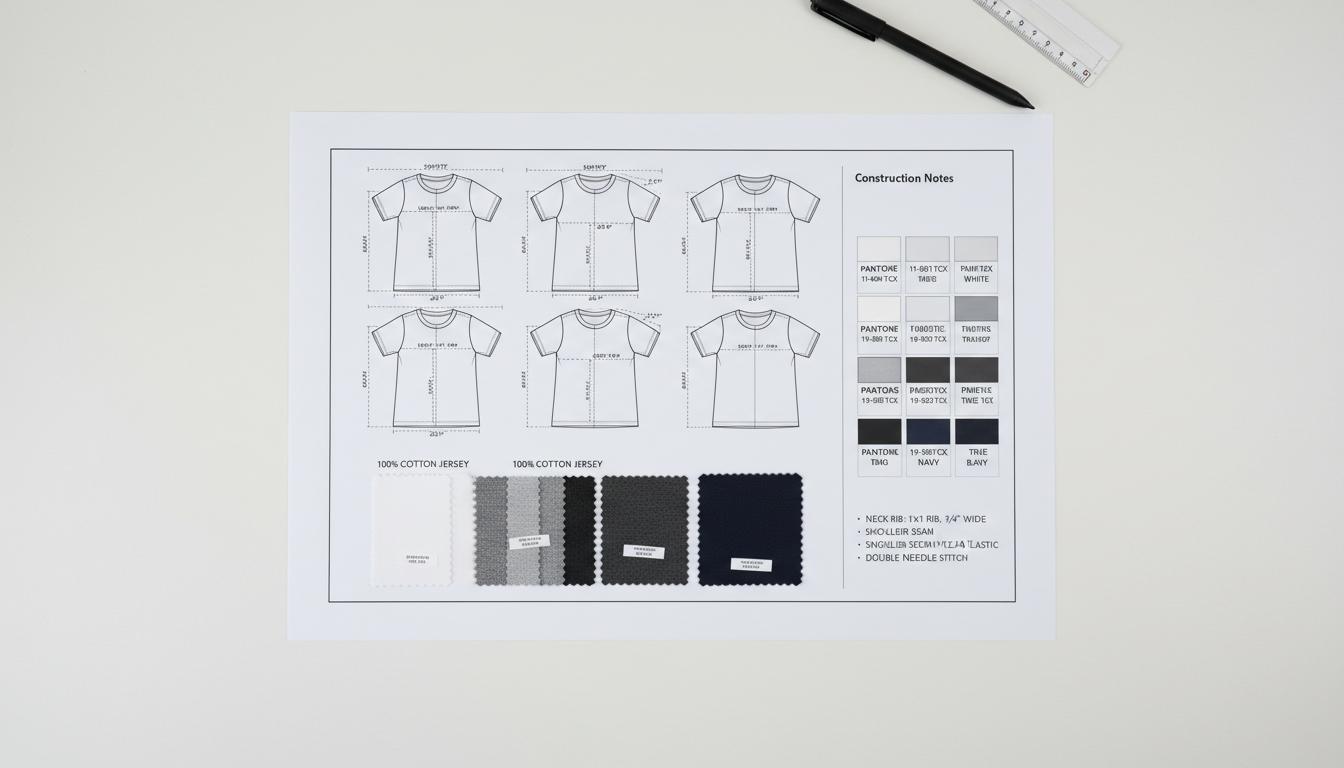
Fabric is the whole product in gym wear. A legging that goes sheer in a squat, a tee that holds sweat instead of moving it, a bra that stretches out after ten washes — none of that is a sewing problem. It is a fabric problem, decided before a single panel is cut. This is what we specify when brands come to us, and why.
The two blends that cover almost everything
Most activewear ranges are built on two fabrics. Get these right and you have covered the bulk of a collection.
| Fabric | Typical blend | Use it for | Why |
|---|---|---|---|
| Nylon / spandex | 75/25 to 80/20 | Leggings, sports bras, premium sets | Softer hand, buttery surface, better recovery. The fabric brands charge a premium for. |
| Polyester / spandex | 85/15 to 88/12 | Performance tees, shorts, compression | Dries faster, costs less, takes sublimation print. Nylon does not sublimate well. |
Nylon or polyester for leggings?
Nylon, if the legging is the product. It feels better against skin, holds its shape through more wash cycles and recovers better after stretching — which is what stops a waistband going slack by month three. Polyester is the right call when the legging is a supporting piece in a wider range, when the price has to come down, or when you want all‑over print, because polyester sublimates and nylon does not.
One thing buyers often miss: spandex content matters more than the base fibre for how a garment feels. At 12% you get stretch. At 22–25% you get compression and recovery. A 78/22 nylon legging and an 88/12 nylon legging behave like different products, and a supplier quoting you “nylon spandex” without the ratio has told you almost nothing.
The rest of the fabric list
Two blends cover the core, but a full range needs more. These are the ones that come up most often:
| Fabric | Where it belongs | Watch for |
|---|---|---|
| Power mesh | Bra wings, support panels, ventilation zones | Specify the weight separately — light mesh gives no support at all |
| Brushed poly / spandex | Cold-weather leggings, winter tops | Brushing adds warmth and hides show-through, but pills faster |
| French terry / cotton blends | Joggers, hoodies, the lifestyle half of a range | Comfortable, but it is not training fabric — cotton holds sweat |
| Seamless knit | Bras, crop tops, premium sets | Knitted as a tube, so no side seams to rub. Higher MOQ and longer lead time |
| Recycled polyester (rPET) | Anywhere virgin polyester would go | Performs the same; costs a little more. Honest about what it does and does not fix — see below |
Squat-proof is a weight question, not a fabric question
Sheerness under stretch is the most common complaint about own-brand leggings, and it is almost always under-specified weight rather than the wrong fibre. For leggings we would not go below 260 gsm, and 280–320 gsm is where the premium feel sits. Below about 240 gsm you should expect show-through on a deep squat, whatever the blend.
Construction matters as much as weight. Interlock and double-knit hide more than single jersey at the same gsm, because there are two yarn systems rather than one. Put the knit construction on the spec, not just a number.
Colour is the third variable nobody plans for. A light grey or pastel legging will show through at a weight where black is completely opaque, so test your lightest colourway, not your flagship black one. We sample the worst case deliberately for exactly this reason.
Sports bras
Same nylon/spandex family, usually a little heavier, often with a separate power-mesh or bonded panel for support. Seamless knitting earns its money here more than anywhere else in a range: no side seams means no rub under a strap on a long run.
Support level is a construction decision, not a fabric one. Low impact is a single layer with a wide band. High impact needs encapsulation, a bonded or moulded cup, and a band that is genuinely firm — which means a higher spandex content in the band than in the body. Specify the two separately.
What moisture-wicking actually means
It is a construction and a finish, not a fibre. Polyester and nylon are both hydrophobic — they do not absorb water, so sweat travels along the yarn to the surface and evaporates. Cotton absorbs it and holds it, which is why a cotton gym tee gets heavy and cold. Any supplier who calls a fabric “moisture-wicking” without naming the blend and the knit is telling you nothing.
Four-way stretch
Two-way stretches across the body. Four-way stretches across and along it, which is what you need for anything that has to move with a hip and a knee at once. For leggings, bras and compression, specify four-way and put it in writing — it is a real cost difference, so it is a real place for a supplier to quietly substitute.
Finishes worth asking about
- Brushed or peached — softer hand, more warmth, slightly more pilling
- Matte vs shine — a yarn and finish choice. Matte reads premium on leggings; shine reads sporty on shorts
- Antimicrobial — reduces odour retention, which is polyester's real weakness against cotton. Worth it on training tees
- UPF — comes largely from tight construction and dark colour; a supplier claiming UPF 50 on light open mesh is guessing
How activewear fails, and what causes it
Every one of these arrives as a customer complaint rather than a factory defect report, so it is worth knowing which decision caused it.
| Failure | Usual cause | Fix at spec stage |
|---|---|---|
| Goes sheer in a squat | Weight too low, or single jersey | 260 gsm minimum, interlock or double knit |
| Waistband rolls down | Band too narrow, or too little spandex in the band | Wider band, higher elastane, or a bonded band |
| Loses shape after a month | Low spandex, or poor recovery yarn | 20%+ spandex and a recovery test on the sample |
| Pilling between the thighs | Brushed surface, loose yarn twist, abrasion | Ask for a Martindale pilling result |
| Holds odour | Polyester's known weakness | Antimicrobial finish, or shift to a nylon-rich blend |
| Colour bleeds in the wash | Dye not properly fixed | Colour fastness test before bulk |
| Shrinks or twists | Fabric not pre-shrunk or relaxed before cutting | Three-wash shrinkage test on the sample |
What to test before you approve bulk
Four tests catch nearly everything above, and all four can be run on a sample:
- Shrinkage after three washes — not one; the second and third tell you more
- Stretch recovery — stretch to 50%, hold, release, measure what comes back
- Pilling (Martindale) — the single best predictor of how the garment looks at month six
- Colour fastness — to washing and to rubbing, both
Ask for these in writing with the sample. A factory that cannot produce them, or that offers reassurance instead of numbers, is telling you something.
Recycled fabric, honestly
Recycled polyester performs identically to virgin polyester in a garment — same wicking, same durability, same print behaviour — and costs a little more. It is a genuine reduction in new plastic and a reasonable claim to make.
What it does not fix is microfibre shedding in the wash, which is the same for recycled and virgin. If sustainability is central to your brand, say what rPET actually does rather than implying it solves everything; buyers in this category check, and an overstated claim costs more credibility than the fabric buys.
Fabric MOQ is not garment MOQ
This catches most first-time brands. Our garment minimum is 50 pieces per style, but fabric is woven or knitted in rolls, and a mill minimum for a custom colour is typically far higher than one style's worth. In practice that means:
- Stock fabrics in stock colours — available at 50 pieces, shortest lead time
- Stock fabric, custom dyed colour — possible, but the dye lot sets the minimum
- Fully custom knitted fabric — realistic at several hundred pieces and up, with three to four weeks added for development
For a first range, use stock fabrics and spend the budget on fit and finishing. Custom fabric is a second-order improvement that most customers cannot feel, and it is where early brands most often spend money they should have kept.
What this costs to make
Our published price for a seamless gym set — leggings and sports bra — is $15.00 per set at 50 sets, factory direct, with your own labels. Fabric choice moves that: nylon/spandex sits at the top of the range, polyester/spandex at the bottom. See full pricing for the rest of the range, or the MOQ calculator to model your own quantities.
Specifying it so you get what you asked for
- Blend and ratio — “nylon/spandex 78/22”, not “nylon mix”
- Weight in gsm — the single most useful number on the sheet
- Knit construction — interlock, double knit, seamless
- Stretch direction — four-way, stated
- Finish — brushed, matte, compression, antimicrobial
- Test results required — shrinkage, recovery, pilling, fastness
If you are not sure of the numbers, send a garment you already like. We will measure it and write the spec from the real thing, which is faster and more accurate than describing it in words. A tech pack helps, but it is not required to start — we build one from references.
Order From FABRIOZA Without a Tech Pack
Our team builds the specification from your reference. Free consultation. Quote in 24 hours.
Prefer email? info@fabrioza.com — we reply within one working day.
Frequently Asked Questions
What fabric is best for leggings?
Nylon/spandex at 75/25 to 80/20 for premium softness and recovery; polyester/spandex at 85/15 to 88/12 when price matters more or you want all-over sublimation print, which nylon does not take well. Spandex content drives the feel as much as the base fibre: 12% gives stretch, 22-25% gives compression and recovery.
What is the best fabric for gym wear?
Two blends cover most ranges. Polyester/spandex for performance tees, shorts and compression, because it dries fast, costs less and sublimates. Nylon/spandex for leggings, bras and premium sets, because it feels better and recovers better. Cotton is the wrong choice for anything you sweat in, as it absorbs water rather than moving it.
What GSM should leggings be so they are not see-through?
Do not go below 260 gsm, and 280-320 gsm is where the premium feel sits. Below roughly 240 gsm expect show-through in a deep squat whatever the blend. Construction matters too: interlock and double knit hide more than single jersey at the same weight. Test your lightest colourway, not black.
Is nylon or polyester better for leggings?
Nylon if the legging is the hero product: softer hand, better shape retention and recovery. Polyester if price has to come down or you want all-over print, because polyester sublimates and nylon does not.
What does moisture-wicking actually mean?
It is a construction and a finish, not a fibre. Polyester and nylon do not absorb water, so sweat travels along the yarn to the surface and evaporates. Cotton absorbs and holds it. A supplier calling a fabric moisture-wicking without naming the blend and the knit is telling you nothing.
Why do my leggings lose their shape after a few washes?
Almost always too little spandex, or a yarn with poor recovery. Stretch is not the same as recovery - a fabric can stretch easily and never come back. Ask for a stretch recovery test on the sample: stretch to 50%, hold, release, and measure what returns.
What tests should I ask for before approving bulk?
Four catch nearly everything: shrinkage after three washes rather than one, stretch recovery, Martindale pilling, and colour fastness to both washing and rubbing. A factory that offers reassurance instead of numbers is telling you something.
Can I get custom fabric at 50 pieces?
Usually not. Garment MOQ and fabric MOQ are different things: our garment minimum is 50 pieces per style, but a mill minimum for a custom knitted or custom dyed fabric is far higher, and adds three to four weeks. For a first range use stock fabrics and spend the budget on fit and finishing instead.
Is recycled polyester as good as virgin polyester?
In the garment, yes - the same wicking, durability and print behaviour, for a little more money. What it does not fix is microfibre shedding in the wash, which is identical for both. Worth using, worth describing accurately.