
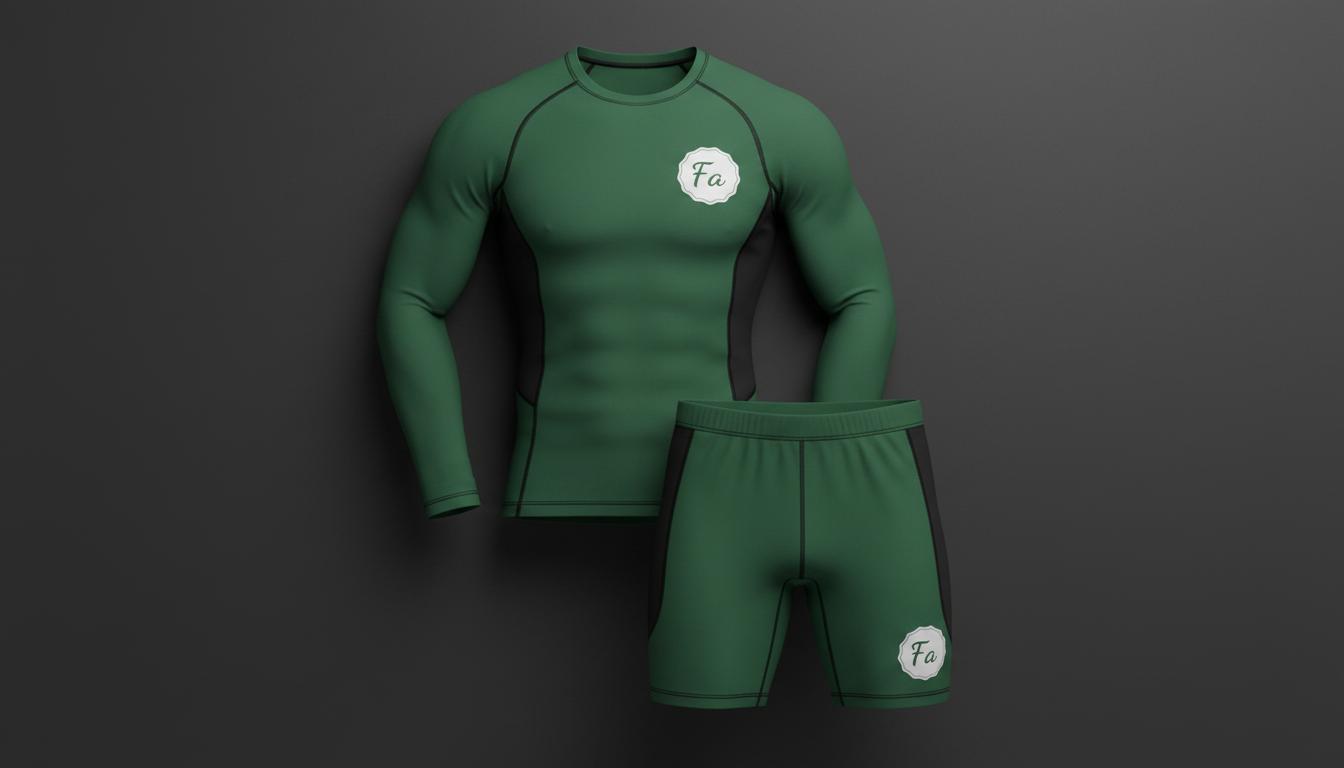
Gym wear is where fashion's biggest success stories of the last decade came from — Gymshark went from a garage screen printer to a £1B+ brand in under ten years. It is also a category with a brutal technical bar: customers squat, sweat, and machine-wash your product three times a week, and they post reviews when it goes sheer or loses shape. This guide covers what actually matters when launching an activewear brand in 2026: the fabric decisions, the quality tests, the real budget, and how to launch at a 50-piece scale.
Step 1 — Choose Your Segment Before Your Logo
"Activewear" contains at least five distinct businesses. Pick one to launch with:
- Lifting / bodybuilding — stringers, oversized pump covers, joggers. Fashion-adjacent, most forgiving technically.
- Training / cross-training — shorts, tees, compression layers. Broadest market, most competition.
- Yoga / studio — leggings, bras, seamless sets. Highest technical bar (squat-proof or die), highest loyalty when you get it right.
- Running — lightweight wicking layers, reflective details.
- Team / functional fitness — box and club partnerships, custom team uniforms. Underrated B2B path with repeat bulk orders.
Your segment sets your fabric spec, your fit blocks, your content style, and your first 50 customers. Trying to launch "a full activewear range" as a startup means being mediocre at five technical products simultaneously.
Step 2 — Learn the Four Fabrics That Run This Industry
| Fabric | Feel & behavior | Use it for |
|---|---|---|
| Polyester/spandex (85/15–90/10) | Wicks fast, holds color and shape, budget-friendly | Tees, shorts, compression tops |
| Nylon/spandex (75/25–80/20) | Buttery hand-feel, superior stretch recovery | Premium leggings, sports bras |
| Seamless knit | Machine-knitted tubes, contour zones, "second skin" | Scrunch sets, ribbed collections |
| Cotton-poly French terry | Structured, warm, streetwear crossover | Pump covers, joggers, hoodies |
Two specs to demand in writing from any manufacturer: squat-proof opacity on bottoms (tested stretched over a fist under bright light, not just on the roll) and 4-way stretch with recovery — fabric that stretches but does not spring back turns into bagged-out knees within a month. Weight matters too: quality leggings run 230–300 GSM, performance tees 140–180 GSM. Our GSM guide explains the numbers.
Step 3 — Nail Fit and Sizing (The #1 Return Reason)
Activewear returns run higher than any other apparel category, and 70%+ of those returns are fit. Three rules from the production floor:
- Grade against a real size chart, not a scaled-down men's block for women's pieces. Women's activewear needs its own pattern with a proper rise, waistband height, and hip curve.
- Sample in two sizes (your core size and one up) and test them in actual workouts — squats, burpees, a wash cycle. A sample that only gets tried on standing still tells you nothing.
- Publish garment measurements on your product pages, not just S/M/L. It cuts returns dramatically.
Document all of this in a tech pack — our free tech pack template includes measurement spec sheets sized for activewear.
Step 4 — Branding That Survives 100 Washes
Activewear branding has physical constraints: big screen prints crack on high-stretch fabric. Use these instead:
- Heat-transfer / silicone logos for stretch panels — flex with the fabric.
- Sublimation for all-over prints on polyester — the ink becomes part of the fiber and cannot crack or peel. This is our specialty as a sublimation manufacturer.
- Embroidery only on stable zones (waistbands, chest of terry pieces) — never on 4-way stretch panels.
- Jacquard waistbands — your logo knitted into the elastic itself; the single strongest "real brand" signal in gym wear.
Step 5 — The Real Budget for a Legit Launch
| Item | Tight budget | Comfortable |
|---|---|---|
| Samples: 2 styles × 2 rounds | $200–350 | $350–600 |
| 50 leggings (nylon/spandex, jacquard waistband) | $550–800 | $700–950 |
| 50 performance tees or shorts | $300–450 | $400–550 |
| Labels, hang tags, poly bags | $120–200 | $250–400 |
| DDP air shipping | $250–400 | $400–600 |
| Website + brand assets | $150–400 | $400–800 |
| Launch content & ads | $300–600 | $800–2,000 |
| Total | $1,870–3,200 | $3,300–5,900 |
Unit economics at retail: leggings that land at $13–16 sell at $48–68; performance tees landing at $7–9 sell at $28–38. Hold a 3.5×+ markup — the activewear customer expects free returns and that has to be priced in. Full cost mechanics in our manufacturing cost breakdown.
Step 6 — Manufacture at 50 Pieces, Not 500
Activewear factories traditionally demand 300–500 pieces per style per colorway because performance fabrics are bought in bulk rolls. That forces a two-style, two-colorway launch to 1,200+ pieces — $15,000–20,000 of inventory before you know what sells. The alternative is a factory built for small-batch performance wear: FABRIOZA runs gym wear production at a 50-piece MOQ with the same moisture-wicking fabrics, flatlock stitching, and 4-needle waistband construction the big brands use. Launch with 100–150 total pieces, learn which style sells, and reorder the winner in 2–4 weeks — that reorder speed is the real edge over competitors sitting on sea-freight containers.
Step 7 — Launch Where Gym People Actually Are
- Build in the gym, not just online: 20 seeded pieces to local coaches, PTs, and box owners beat $500 of cold ads. Gym wear spreads through locker rooms.
- Content = proof: squat-proof tests on camera, wash-test time lapses, fabric close-ups. Activewear buyers are burned and skeptical; showing beats claiming.
- UGC engine: every early customer gets a card asking for a tagged training clip in exchange for a discount on drop two.
- Drop rhythm: like streetwear, scarcity works — "50 made per colorway" converts. (Our streetwear launch playbook covers the drop mechanics; they transfer directly.)
Mistakes That Sink New Activewear Brands
- Skipping the squat test — one viral "sheer leggings" review can end a brand.
- Launching leggings first without technical experience — start with tees, shorts and pump covers; graduate to leggings on round two.
- Screen-printing stretch panels — cracked logos by wash five.
- Ordering a full size run of every colorway — let the MOQ work for you: more styles, fewer units, reorder winners.
- Competing with Gymshark on price — you cannot; compete on niche identity and drops instead.
Frequently Asked Questions
How much does it cost to start a gym wear brand?
A credible two-style launch (e.g., 50 leggings + 50 performance tees) with custom labels, samples, shipping and a basic website runs $1,900–3,200 using a 50-piece MOQ manufacturer. With a proper marketing budget, plan $3,500–6,000.
What fabric is best for gym clothing?
Polyester/spandex (85/15) for wicking tees, shorts and compression; nylon/spandex (75/25 to 80/20) for premium leggings and bras; seamless knits for scrunch and ribbed sets; cotton-poly French terry for pump covers and joggers.
What does squat-proof mean in manufacturing?
Fabric that remains opaque when fully stretched. It is achieved through fabric weight (230–300 GSM for leggings), knit density, and correct pattern grading. Always test samples stretched under bright light before approving bulk production.
What is the minimum order for activewear manufacturing?
Most performance-wear factories require 300–500 pieces per style per colorway. FABRIOZA manufactures activewear from 50 pieces per style, letting a new brand launch a full collection for the inventory cost of a single style elsewhere.
Can I put my logo on leggings without it cracking?
Yes - use heat-transfer or silicone logos on stretch panels, sublimation on polyester pieces, or a jacquard logo waistband. Avoid traditional screen prints on 4-way stretch fabric; they crack within weeks of training use.
Ready to Sample Your First Activewear Collection?
FABRIOZA manufactures leggings, compression wear, shorts, sports bras and gym tees from 50 pieces per style - moisture-wicking performance fabrics, design mockups, 24-hour quotes.
Prefer email? info@fabrioza.com — we reply within one working day.